VRMac
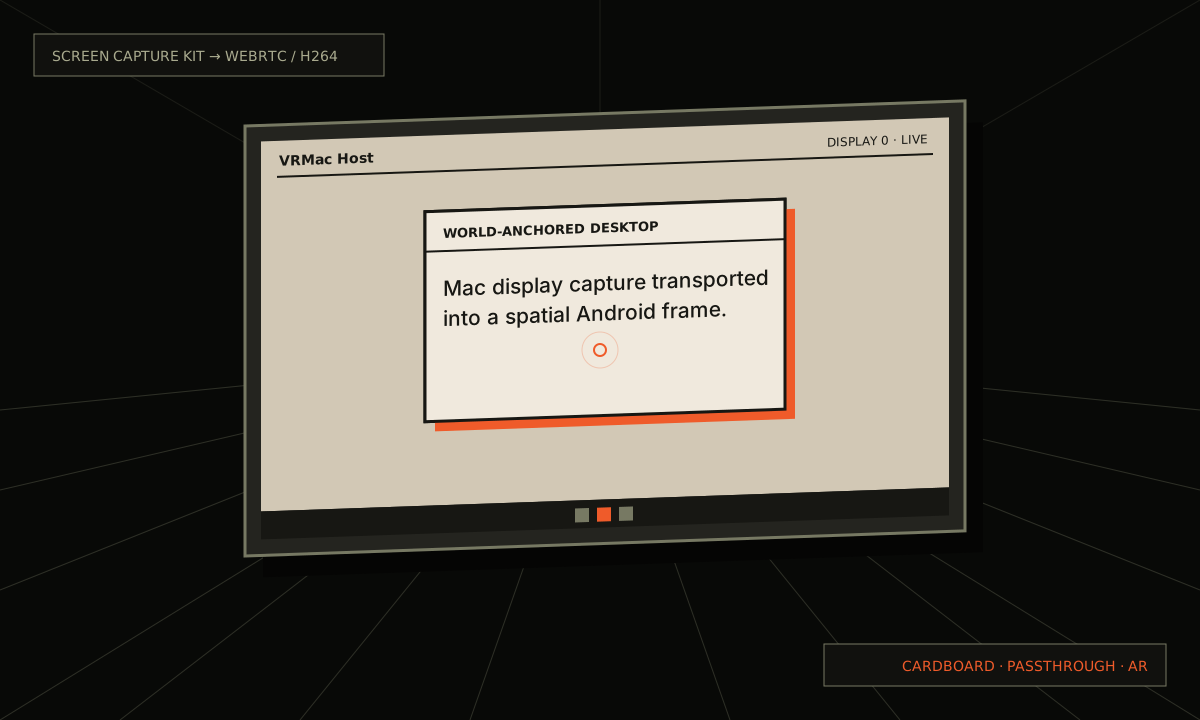
A Mac display transported into a world-anchored Android VR, passthrough, and AR environment.
Read the build from several angles.
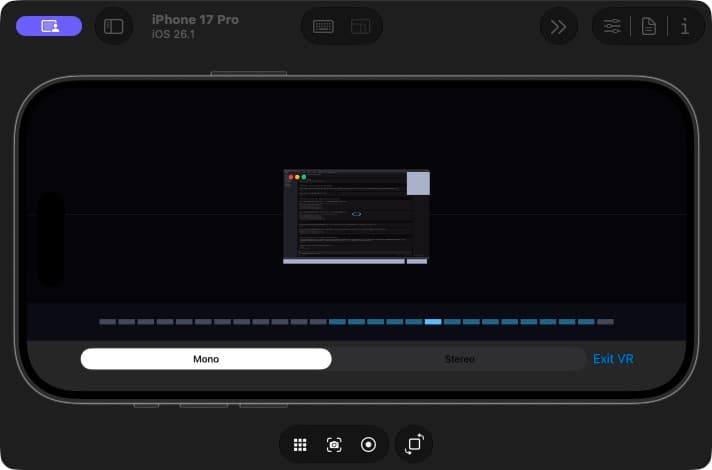
Authentic screens, terminal output, and architecture plates are kept together so the page shows the shape of the work without inflating the claim.
SPATIAL ↔ NATIVE ↔ MOBILE
What exists.
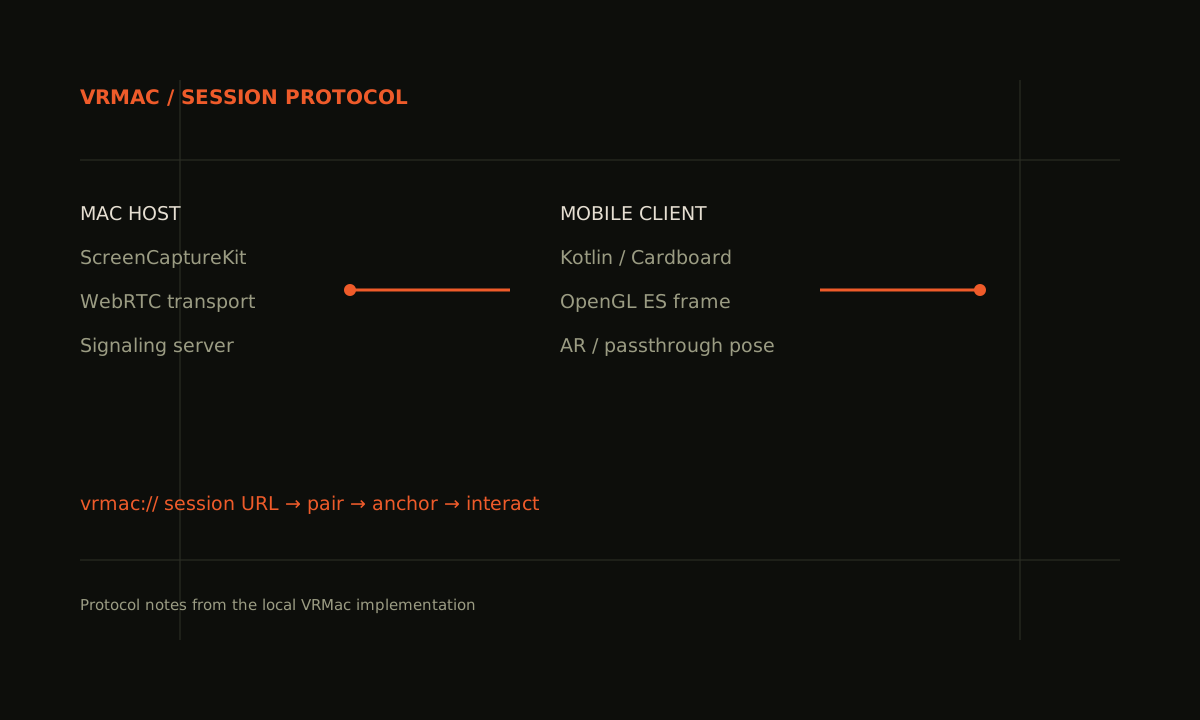
A Swift host captures the Mac display while a Kotlin/Cardboard client renders it as a movable desktop in 3D space using ordinary mobile hardware.
Where it resisted.
Capture, signaling, video transport, stereoscopic rendering, head pose, world placement, and gaze input must behave like a single product across two machines.
What I changed.
I normalized the session protocol, repaired signaling and frame handling, and built gaze-driven placement with VR, passthrough, and AR modes.
The obvious implementation was not the product.
Use a phone and Cardboard as an accessible spatial client rather than requiring a dedicated high-end headset.
Current proof
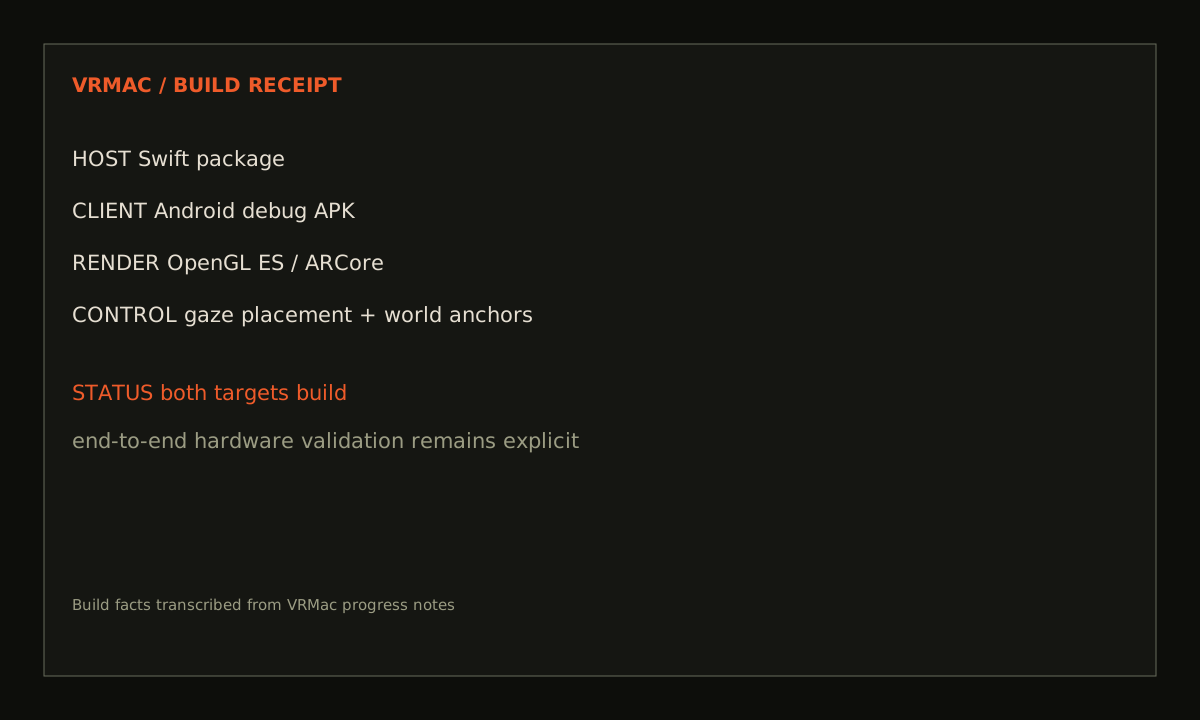
03- Swift host builds as a standalone package.
- Android client compiles, passes unit tests, and produces a debug APK.
- Pairing uses a normalized vrmac:// session URL with focused signaling and world-math tests.
What this build changed.
Cross-device experiences feel convincing only when transport, interaction, and spatial math are designed as one continuous system.
The implementation surface.
Proof should be inspectable.
A public repository or live build is not linked yet. The status above states exactly what has been verified.