Motion Cues
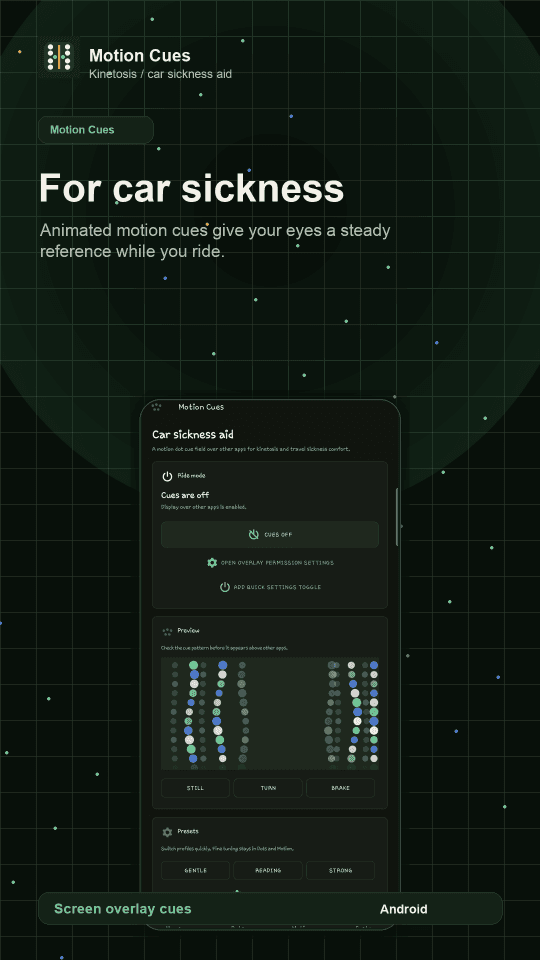
A native Android overlay that turns vehicle movement into a quiet visual reference above other applications.
Read the build from several angles.
Authentic screens, terminal output, and architecture plates are kept together so the page shows the shape of the work without inflating the claim.
NATIVE ↔ MOBILE
What exists.
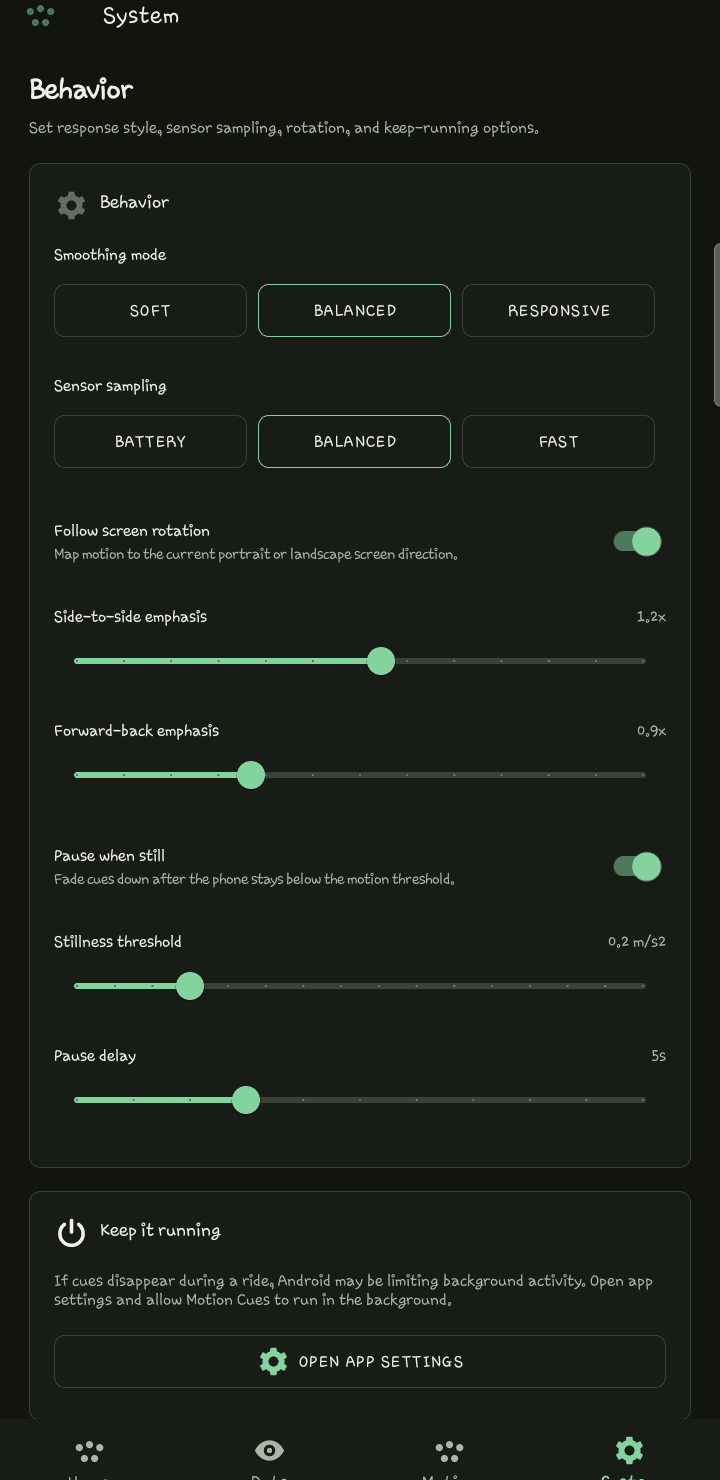
Motion Cues uses device sensors and a non-touchable system overlay to display motion-reactive dots while leaving the application underneath fully usable.
Where it resisted.
The cues must remain helpful across orientation changes and sensor noise without blocking touches or demanding attention.
What I changed.
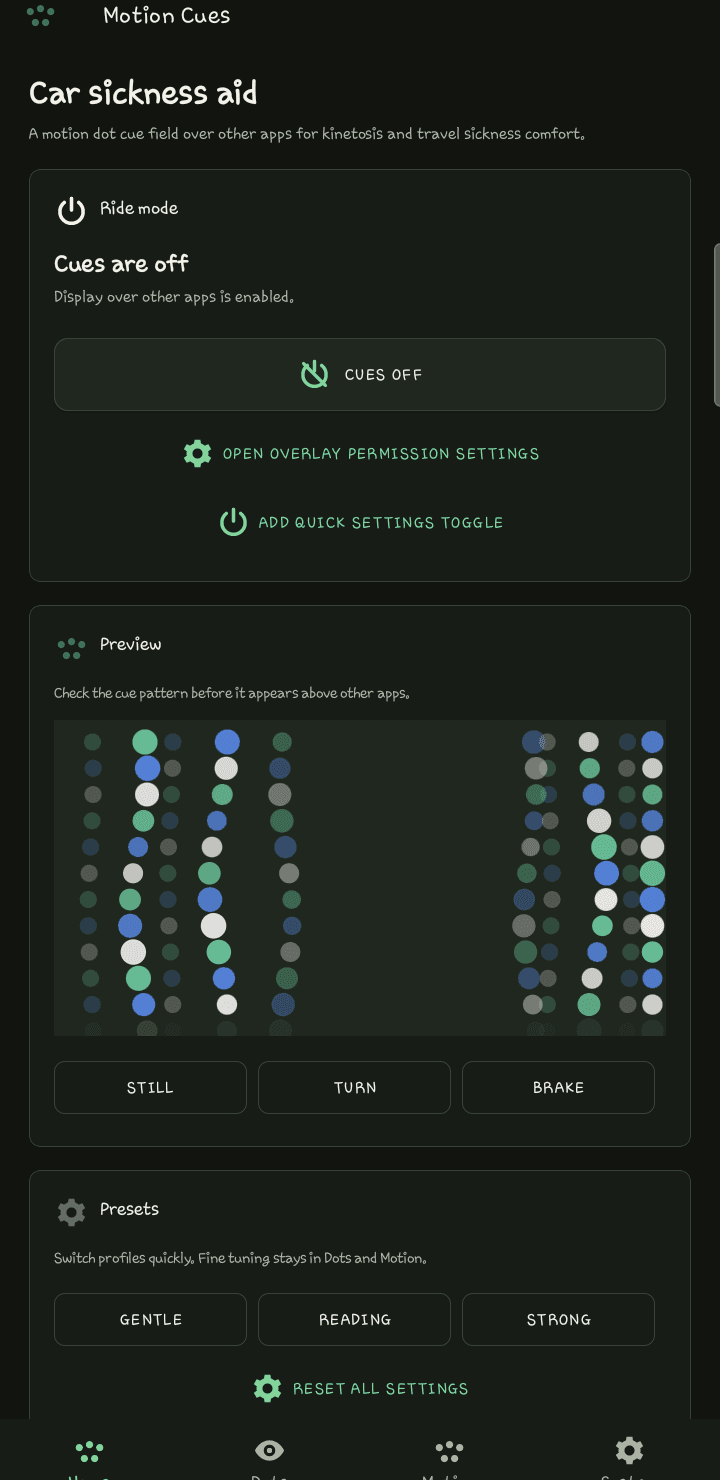
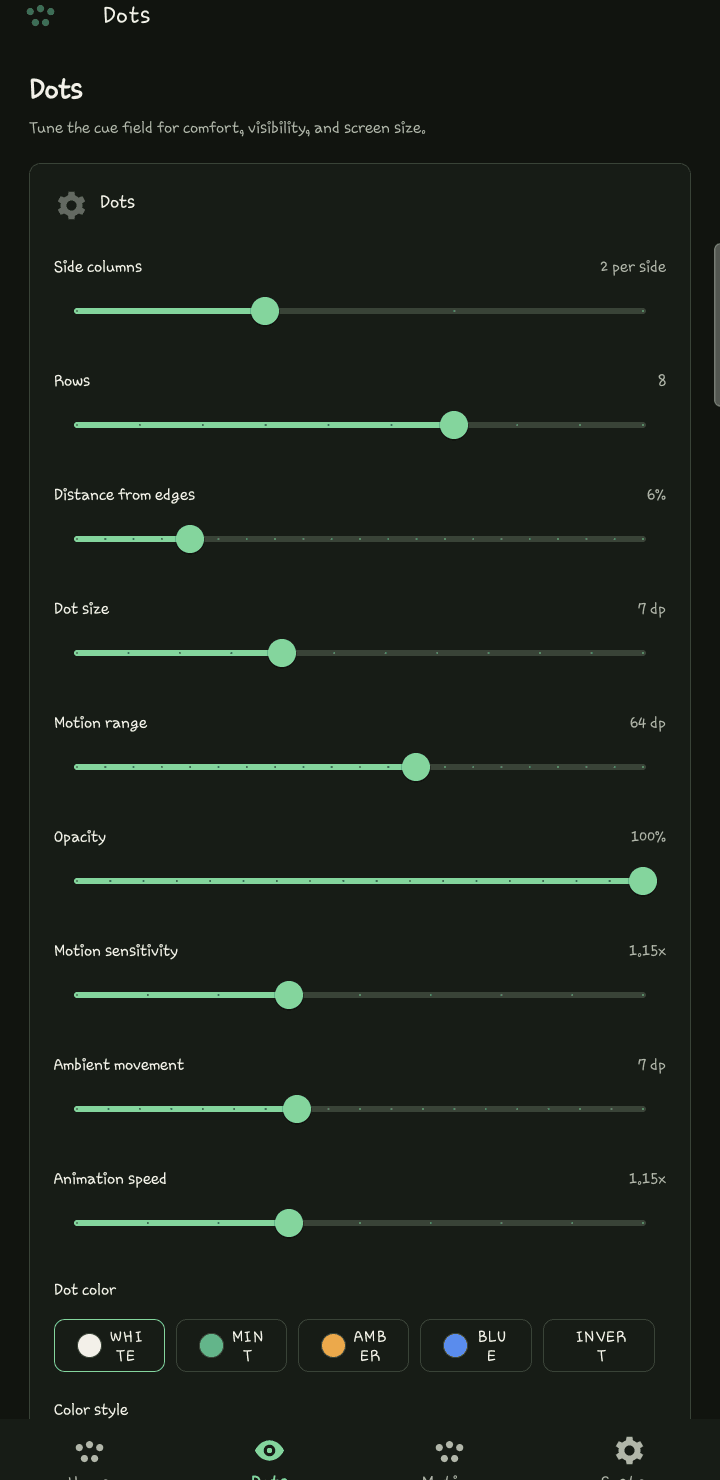
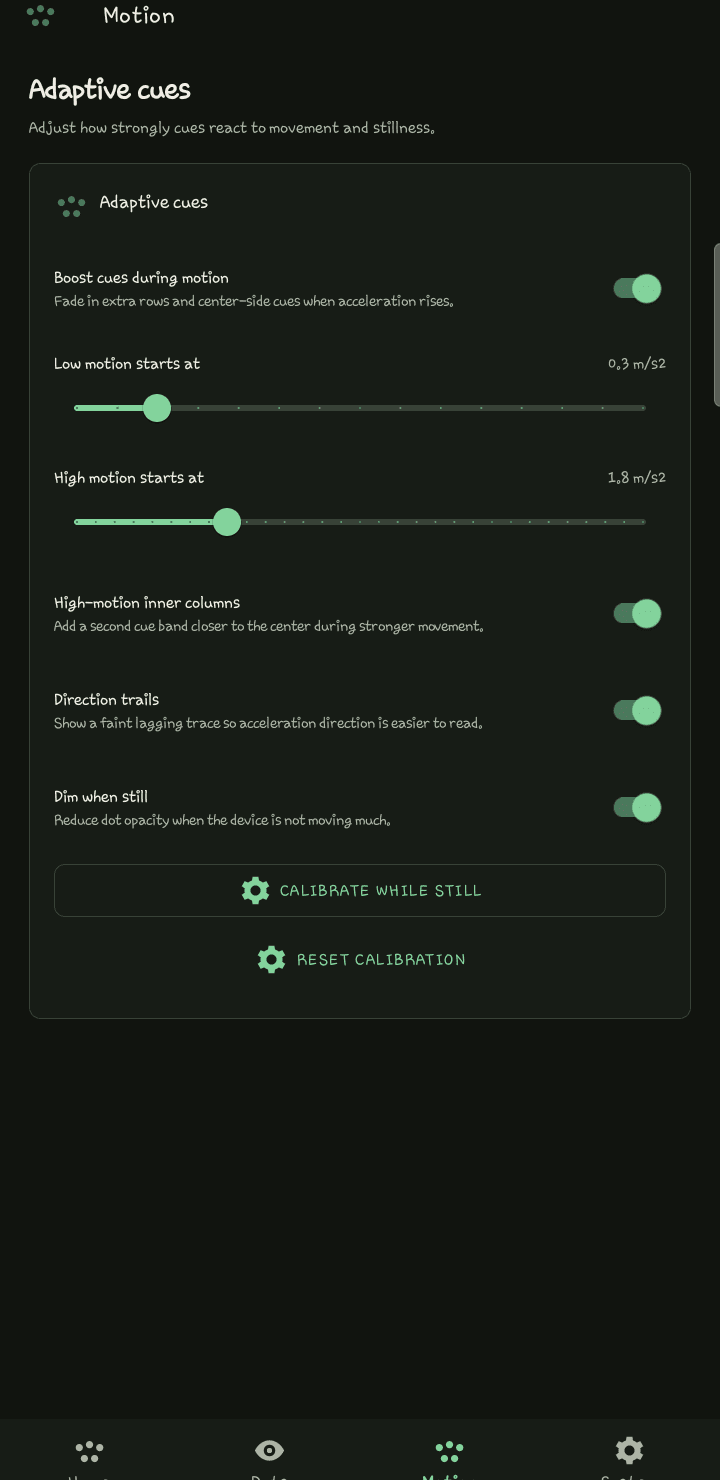
I built calibration, adaptive intensity, smoothing, stillness behavior, presets, Quick Settings controls, foreground-service reliability, and the Android release path.
The obvious implementation was not the product.
Keep the cue layer deliberately restrained and non-touchable; usefulness depends on becoming part of the background.
Current proof
03- Native sensor overlay, foreground service, notification controls, and Quick Settings tile are implemented.
- Motion mapping adapts to orientation and provides accelerometer fallback.
- A signed release bundle and Play Store visual assets were produced.
What this build changed.
A system-level product can require deep engineering while its successful interface remains almost invisible.